
Standing Tall for Conservation

Giraffe populations are more at risk than you might realize
August 4, 2025*
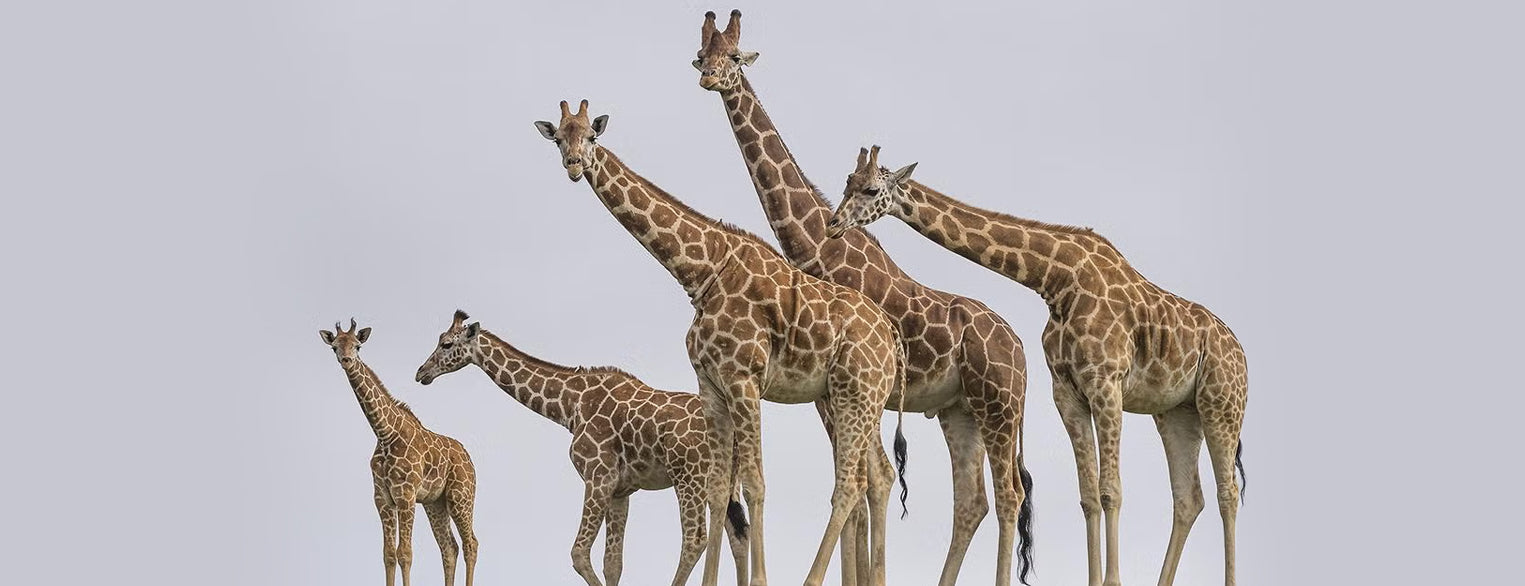
Against the vast, golden plains of the African savanna, a group of giraffes—called a tower—stands out like a cluster of living skyscrapers. As they wander in search of water and vegetation, one of them stops to feed on tender leaves at the top of a gnarled and twisted acacia tree. Because she stands at around 18 feet tall, even the highest branches are within her reach.
With a surprisingly nimble blue-black tongue that is more than 15 inches long, she delicately plucks leaves from the thorny branches, skillfully avoiding the sharp defenses of the tree. It’s a delicate dance between the tree’s natural adaptations and those of the giraffe, highlighting the intricate balance of life in this remarkable ecosystem.

Giraffes are well adapted to feed on savanna vegetation, with height that allows them to reach leaves at the very top of tall acacia trees and a tongue that can skillfully pluck leaves from thorny branches.
Picturing the African savanna without roaming towers of giraffes would be unthinkable. However, over the past 35 years, their numbers have dropped by more than 30%. Masai and reticulated giraffes are endangered and two other subspecies, Kordofan and Nubian giraffes, are categorized as critically endangered.
These graceful giants are experiencing what conservationists call a "silent extinction," as many people aren’t aware that the species is at risk. Habitat loss and mounting challenges to human-wildlife coexistence are contributing to these decreasing numbers. Illegal hunting and changing weather patterns are making it harder for giraffes to survive, and to find the food, water, and safe spaces they need.

Adult giraffes can be up to 18 feet tall, so it's no wonder that groups of giraffes are often called "towers."
Focusing on the Future
While giraffes face many challenges, we’re working on solutions. Through our Savanna Conservation Hub, we collaborate on community-led initiatives to secure a thriving future for the planet’s tallest land animal.
In northern Kenya, a dedicated group known as Twiga Walinzi (“giraffe guards” in Swahili) has become a beacon of hope as they work to prevent poaching and improve coexistence. Day after day, Twiga Walinzi patrol key hotspots, surveying giraffe populations and monitoring their movement. Their vital work is helping empower local communities to make informed decisions that protect giraffes.

Twiga Walinzi monitor giraffe movements and work to improve human-giraffe coexistence in northern Kenya.
Meanwhile, the Chui Mamas (“Leopard Mothers” in Swahili) is a group of over 600 women in northern Kenya who are transforming their communities through conservation and empowerment. Together, they find solutions to human-wildlife coexistence while creating sustainable livelihoods. Their efforts include rangeland restoration, water retention projects, and the establishment of the Chui Mamas Centre—a hub for education, conservation meetings, and income-generating activities including beekeeping, soap making, tailoring, and organic farming. By uniting women and amplifying their voices, the Chui Mamas are not only safeguarding wildlife but also fostering coexistence and resilience in their communities.

Eye-catching objects called "flashers" are being installed on fences in Kenya's Sera Conservancy to prevent giraffes from getting entangled in fence wire.
Ensuring healthy coexistence between wildlife and communities requires innovative solutions to shared challenges. Fences, meant to protect livestock, can turn deadly if a giraffe becomes entangled in stretches of wire. Recognizing this threat, a new partnership took root with Kenya’s Sera Conservancy to install “flashers”—eye-catching deterrents strung along stretches of fencing that pose the greatest risks, keeping giraffes away from potential harm. Conservation teams are tracking the success rates of each type of flasher used and working with local communities to raise awareness, making a brighter and safer future possible for giraffes.

Two endangered Masai giraffe calves were born this year at the San Diego Zoo Safari Park, including a male born to Mara (pictured), and one calf was welcomed at the San Diego Zoo. These births increase the global population and strengthen the species' genetic diversity.
Towers of Hope
Closer to home, there’s new hope at the San Diego Zoo Safari Park and at the San Diego Zoo. Two Masai giraffe calves were born into the Safari Park herd this spring, and one was born at the Zoo this summer, increasing the global population and bringing much-needed attention to this endangered species.
Wildlife allies like you make it all possible. With you by our side, we’re saving, protecting, and caring for giraffes through our Savanna Conservation Hub. Together, we can stand tall for giraffes, ensuring they continue to be part of their savanna ecosystems and inspire wonder for generations to come.
Show your love for giraffes and support their future. When you shop our giraffe-themed merchandise—including tees, hats, jewelry, drinkware, plush, and more—you’re not just taking home something adorable. Every purchase directly supports vital conservation efforts that help giraffes thrive in their native habitats. Explore our giraffe collection and stand tall for wildlife with us.

*As seen on San Diego Zoo Wildlife Alliance's Story Hub.
Leave a comment
Comments will be approved before showing up.
